

What’s a country that’s at the top of your bucket list?
An independent travel perspective on ancient wonders, dramatic landscapes, historic cities and the practical realities of visiting the Kingdom.
If you asked me to choose one country I would book a flight to tomorrow, it wouldn’t be France or Turkey—although both are firmly on my travel wish list.
It would be Saudi Arabia.

Not because it is the easiest destination to visit. Not because it promises the most familiar comforts. But because it offers something I increasingly look for when choosing where to travel: the opportunity to discover a place whose history, landscapes and cultural identity still feel unfamiliar to me.
For decades, Saudi Arabia was not widely associated with international leisure tourism. That is changing as the Kingdom opens more destinations and experiences to visitors. I want to explore it during this period of transformation, while its ancient heritage and contemporary ambitions are becoming more visible to the world.
My interest goes beyond ticking famous landmarks off a list. I want to stand before monumental Nabataean tombs, explore historic streets shaped by centuries of trade, experience the vastness of the desert and understand more about the places that shaped Saudi history.
Here are the destinations putting Saudi Arabia at the top of my travel bucket list, along with the practical details I would research before booking the trip.
1. Hegra, AlUla: The Ancient Wonder I Most Want to See
Why it is on my list: Remarkable Nabataean architecture, ancient history and a landscape unlike anywhere else.

If I had to choose just one reason to visit Saudi Arabia, it would be Hegra, the archaeological site also known as Al-Hijr or Madain Salih, near AlUla in northwestern Saudi Arabia.
Hegra became Saudi Arabia’s first UNESCO World Heritage Site in 2008. It was an important southern centre of the Nabataean civilization, the same civilization associated with Petra in Jordan.
According to UNESCO, the site contains 111 monumental tombs, including 94 with decorated façades, dating primarily from the first century BC to the first century AD. The remains also include ancient inscriptions, rock drawings and evidence of sophisticated water-management techniques. UNESCO’s official Hegra profile provides an excellent introduction to its historical significance.
What fascinates me is the idea of encountering these elaborate façades carved directly into sandstone cliffs, with their architectural details surviving across two millennia.
Petra is already internationally famous. Hegra offers another opportunity to understand Nabataean history in a different setting, surrounded by the distinctive desert scenery of AlUla.
I would not visit simply to photograph the tombs. I would want to understand the people who built them, the trade networks that supported their civilization and the engineering knowledge that made life possible in an arid environment.
My travel-planning note: I would reserve an official Hegra visit in advance and confirm the available tours, transport arrangements, seasonal conditions and entry requirements.
Useful resources:
2. The Edge of the World, Riyadh: A Landscape That Makes You Feel Small
Why it is on my list: Vast horizons, dramatic cliffs and the feeling of standing above an immense desert landscape.

Some destinations attract visitors because of what people have built there. Others attract them because of what nature has created.
The Edge of the World, commonly associated with Jebel Fihrayn near Riyadh, belongs firmly in the second category.
Part of the dramatic Tuwaiq escarpment, this destination is known for its steep cliffs and sweeping views across an expansive, arid landscape. From the viewpoints, the land appears to stretch almost endlessly towards the horizon.
The name sounds like a travel-marketing slogan, but the landscape itself is the real attraction.
I imagine standing near the cliff edge, looking across the immense terrain and appreciating just how different the world feels when the nearest city seems far away.
For me, the appeal would be the scale, the silence and the opportunity to experience a side of Saudi Arabia that is very different from its modern urban centres.
There is, however, a practical side to this excursion.
The Edge of the World is not an ordinary city attraction. Access conditions depend on the route, weather and current arrangements. Visitors should research transport options, road conditions and whether a guided excursion is appropriate. A suitable four-wheel-drive vehicle may be necessary for certain approaches.
I would choose an experienced local operator, carry adequate water and supplies, check the forecast and avoid approaching unprotected cliff edges.
My travel-planning note: I would plan this as a dedicated excursion rather than assuming it can be reached like a regular roadside viewpoint.
Useful resource:
3. Historic Jeddah, Al Balad: A City with Stories in Its Walls
Why it is on my list: Historic architecture, traditional markets and the cultural connections of the Red Sea.

Historic Jeddah, widely known as Al Balad, is one of the places I would most like to explore slowly, without rushing from one attraction to another.
Recognized as a UNESCO World Heritage Site in 2014, Historic Jeddah developed as an important port and gateway for pilgrims travelling to Makkah. Its history also reflects centuries of trade and cultural exchange across the Red Sea and the Indian Ocean.
The architecture is a major part of its appeal.
Traditional coral-stone buildings, intricate wooden rawashin—projecting latticework balconies—and distinctive tower houses create a visual identity quite different from that of a modern city skyline.
UNESCO’s account of Historic Jeddah explains how trade, pilgrimage, local building techniques and international influences shaped the district. Explore Historic Jeddah’s UNESCO profile.
What appeals to me most is the possibility of experiencing the district as more than an architectural attraction. Its historic lanes, markets, traditional buildings and everyday urban life offer opportunities to understand how a port city developed through movement between regions and cultures.
I would leave time to wander, discover traditional shops, explore the historic architecture and sit down for Saudi coffee while observing the rhythm of the neighbourhood.
I would also want to explore the local food scene and learn more about the district’s traditional crafts and trading history.
My travel-planning note: I would check current opening arrangements for museums, heritage buildings and individual attractions, since access can vary. I would also visit with respect for residents, private properties and places of worship.
Useful resources:
4. Diriyah and At-Turaif: Discovering the Roots of the Saudi State
Why it is on my list: Najdi architecture, political history and the contrast between historic settlements and modern Riyadh.

Just outside Riyadh lies Diriyah, a historic settlement closely associated with the origins of the Saudi state.
Its most significant heritage area, At-Turaif, was inscribed on UNESCO’s World Heritage List in 2010. The district served as the first capital of the Saudi Dynasty and is notable for its traditional Najdi architectural style, including substantial structures built using earthen materials.
The buildings offer a fascinating example of how architecture developed in response to the environment, available materials and the needs of the community.
UNESCO describes At-Turaif as an important historic urban ensemble containing the remains of palaces and other structures associated with the development of the Saudi state. Read UNESCO’s official account of At-Turaif.
I would want to explore the district to understand its architecture and history, rather than simply admire its restored façades.
The wider Diriyah area also presents an interesting contrast between heritage conservation, contemporary urban development, dining and cultural experiences. Bujairi Terrace is among the area’s dining destinations, while the nearby JAX District is associated with creative and cultural activity.
That combination makes Diriyah particularly appealing to me: it offers a way to explore the past while seeing how Saudi Arabia is developing new public spaces around its heritage.
My travel-planning note: I would verify access arrangements, ticket requirements and opening hours for At-Turaif and nearby attractions before visiting.
Useful resources:
5. When Is the Best Time to Visit Saudi Arabia?
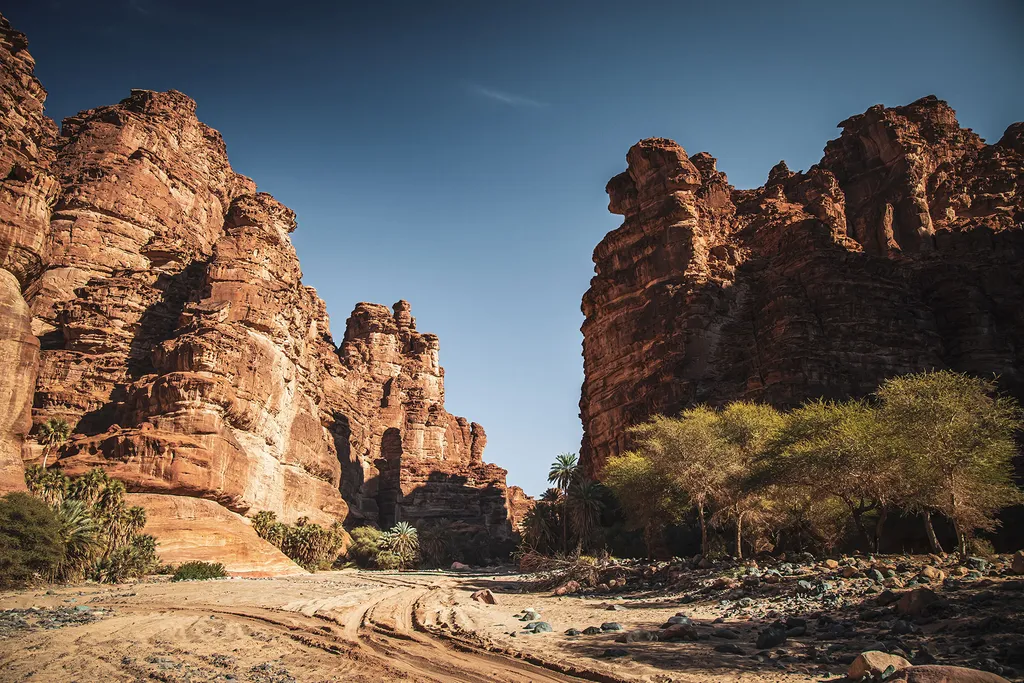
Saudi Arabia AlUla desert sandstone mountains winter golden hour clear sky.
For the destinations on my list, I would initially look at November through March, when many parts of Saudi Arabia generally experience more comfortable conditions for outdoor sightseeing than during the hottest summer months.
That does not mean the entire country has the same weather. Coastal Jeddah, inland Riyadh and the AlUla region can experience different temperatures and conditions, including cooler winter nights in desert areas.
My priorities would be:
- Hegra and AlUla: Choose dates suitable for outdoor exploration and check the seasonal programme of tours and events.
- The Edge of the World: Prioritize safe driving conditions, visibility and suitable daytime temperatures.
- Historic Jeddah: Allow time to walk around the heritage district, markets and surrounding streets.
- Diriyah: Check the schedule for heritage attractions and any seasonal cultural or dining experiences.
Saudi Arabia also hosts seasonal entertainment and cultural programmes. Riyadh Season and Winter at Tantora in the AlUla region are examples of events that have taken place in previous years, but exact dates and programmes change.
I would confirm the current calendar before planning a trip around a particular event.
6. Saudi Arabia Travel Requirements: Visas, Dress and Local Customs
A destination can be exciting to research and still require careful practical preparation.
Saudi Arabia is not somewhere I would plan to visit without checking the entry requirements and understanding local expectations.
Tourist visa and entry requirements
Saudi Arabia offers electronic tourist-visa options to eligible travellers, but eligibility and requirements depend on nationality, passport and the applicable visa rules.
Before booking, I would check:
- Whether my nationality and passport qualify for an eVisa.
- Passport-validity requirements.
- The applicable visa fee and permitted length of stay.
- Whether health insurance is included or required under the relevant visa arrangements.
- Whether accommodation details or additional documents are required.
- The conditions governing the intended purpose of travel.
I would not rely on an old article for the current visa price or assume that every nationality follows the same process.
Official resource: Saudi tourist eVisa portal.
What should tourists wear in Saudi Arabia?
Visitors should respect local customs and dress modestly in public places.
Tourists are not generally required to wear an abaya or hijab in ordinary public settings, although expectations can differ in particular religious places and circumstances. Visitors should check the rules applicable to the places they intend to visit.
As a practical approach, I would pack comfortable, modest clothing suitable for walking, desert excursions and changing temperatures. Women visiting mosques should be prepared to cover their hair where required, and all visitors should follow the instructions of the religious site.
For current guidance, consult the official Saudi eVisa public decorum and etiquette information.
Alcohol and local laws
Alcohol is generally prohibited in Saudi Arabia, and visitors should not assume that the rules familiar from other destinations apply there.
I would review official local laws and public-conduct guidance before travelling and respect the regulations throughout the visit.
Practical safety and transport
For remote desert excursions, I would arrange transport with a reputable operator, check road and weather conditions, carry sufficient water and avoid travelling into isolated terrain without appropriate preparation.
For city travel, I would confirm transport options, travel times and the locations of the attractions I want to visit.
These precautions would help me enjoy the experience without treating unfamiliar surroundings as an afterthought.
7. How I Would Plan a Saudi Arabia Itinerary
The four destinations on my list are spread across different regions, so I would not assume that they can all be visited comfortably in a couple of days.
I would organize the journey around two main areas: Riyadh and its surroundings, and the AlUla–Jeddah portion of the trip.
| Destination | Time I would allow | Main reason for visiting |
|---|---|---|
| Riyadh and the Edge of the World | 2–3 days | City exploration and a guided desert excursion |
| Diriyah and At-Turaif | Half a day or more | Heritage, architecture and history |
| AlUla and Hegra | 2–3 days | Archaeological visits and desert landscapes |
| Jeddah and Al Balad | 1–2 days | Historic streets, markets and local culture |
These are suggested planning allowances, not fixed requirements. Actual travel time depends on flights, road conditions, tour availability and personal interests.
If I had approximately seven to nine days, I would investigate flight connections between the regions rather than assume that driving would always be the most practical option.
I would also check whether any planned activities require advance reservations, guided access or specific entry arrangements.
8. Is Saudi Arabia Worth Visiting?
My answer is yes—particularly for travellers interested in archaeology, cultural heritage, desert scenery and the history of the Arabian Peninsula.
But I would approach the trip with realistic expectations.
Saudi Arabia is a large country, and its destinations offer very different experiences. A visit to Hegra is not the same as exploring Jeddah’s historic lanes. A remote desert excursion requires different preparation from an evening spent in Diriyah.
The country is also undergoing rapid development in tourism and urban infrastructure. That can create exciting opportunities, but it means visitors should verify current arrangements rather than depend on old travel advice.
For me, the appeal lies in the combination of ancient history, distinctive architecture and landscapes that feel far removed from everyday life.
I want to stand before the Nabataean tombs at Hegra, look across the cliffs at the Edge of the World, wander through the historic streets of Al Balad and understand the story preserved in Diriyah’s mud-brick structures.
These are not interchangeable attractions. Each reveals a different part of Saudi Arabia’s past and present.
9. Frequently Asked Questions About Visiting Saudi Arabia
What are the best places to visit in Saudi Arabia?
For a trip focused on history, architecture and desert landscapes, I would consider Hegra in AlUla, the Edge of the World near Riyadh, Historic Jeddah’s Al Balad district, and Diriyah’s At-Turaif district. The best itinerary depends on available time and travel preferences.
What is the best month to visit Saudi Arabia?
November through March is a useful starting point for planning outdoor sightseeing in many parts of the country. Conditions vary by region, so travellers should check local forecasts and seasonal event schedules for their specific dates.
Is Hegra the same as Madain Salih?
Hegra is also known as Al-Hijr or Madain Salih. It is a major Nabataean archaeological site near AlUla and Saudi Arabia’s first UNESCO World Heritage Site.
Can tourists visit the Edge of the World independently?
Access depends on current conditions, routes and local arrangements. Because the area is remote and includes exposed cliffs, travellers should check official guidance and consider a reputable guided excursion, particularly if unfamiliar with the terrain.
Do women need to wear an abaya or hijab in Saudi Arabia?
Tourists are not generally required to wear an abaya or hijab in ordinary public settings. Modest clothing is expected, and specific religious sites may have additional dress requirements. Check current official guidance before travelling.
Do I need to book Hegra in advance?
I would check the official tourism and booking information before travelling, because tour availability, access arrangements and seasonal programmes can vary. Advance booking is a sensible precaution.
Is Saudi Arabia suitable for first-time international travellers?
It can be, provided travellers research entry requirements, transport, local laws, weather and the practicalities of visiting remote attractions. A well-planned itinerary can make the experience easier to navigate.
10. Final Thoughts: Why Saudi Arabia Remains at the Top of My List
Saudi Arabia is not a destination I would choose simply because it is trending or because a particular place looks spectacular in photographs.
I want to visit because its history and landscapes raise questions I would like to explore in person.
How did the Nabataeans create such remarkable monuments? What stories do the historic buildings of Jeddah preserve? How did settlements such as Diriyah develop in the desert environment? And what does it feel like to stand at the edge of a vast escarpment, looking across a landscape that seems to have no end?
These are the experiences that make travel meaningful to me.
I still want to visit France and Turkey. But Saudi Arabia currently occupies a special place on my bucket list because it offers a combination of archaeological discovery, cultural heritage and dramatic natural scenery that I find particularly compelling.
I would go prepared to research, observe, listen and learn—not expecting every detail to be familiar, and not assuming that a destination exists simply to meet a visitor’s expectations.
That is why Saudi Arabia is at the top of my travel bucket list. And when I finally go, I want the experience to be about much more than the photographs I bring home.
Official travel resources
Before booking, I would start with these reliable sources:
- Visit Saudi — Official tourism website
- Saudi tourist eVisa portal
- UNESCO — Hegra Archaeological Site
- Visit Saudi — Edge of the World
- UNESCO — Historic Jeddah, the Gate to Makkah
- UNESCO — At-Turaif District in ad-Dir’iyah
- Saudi eVisa — Public decorum and etiquette
Travel note: Entry requirements, prices, access conditions, tour availability and opening hours can change. Verify the details with the relevant official source before making reservations.
- Why Saudi Arabia Is at the Top of My Travel Bucket List
- What Are My Strategies for SEO? A Complete Guide to SEO, AEO and GEO for Better Online Visibility
- The Energy of Not Caring: A Mental Health Argument for Selective Attention
- Project Tahaffuz: Shielding the Ummah Through Physical Defense, Cyber Hygiene, and Islamic Ghairah
- The dark side of social media: A reflection on social media and your mental health


Share your views on it