
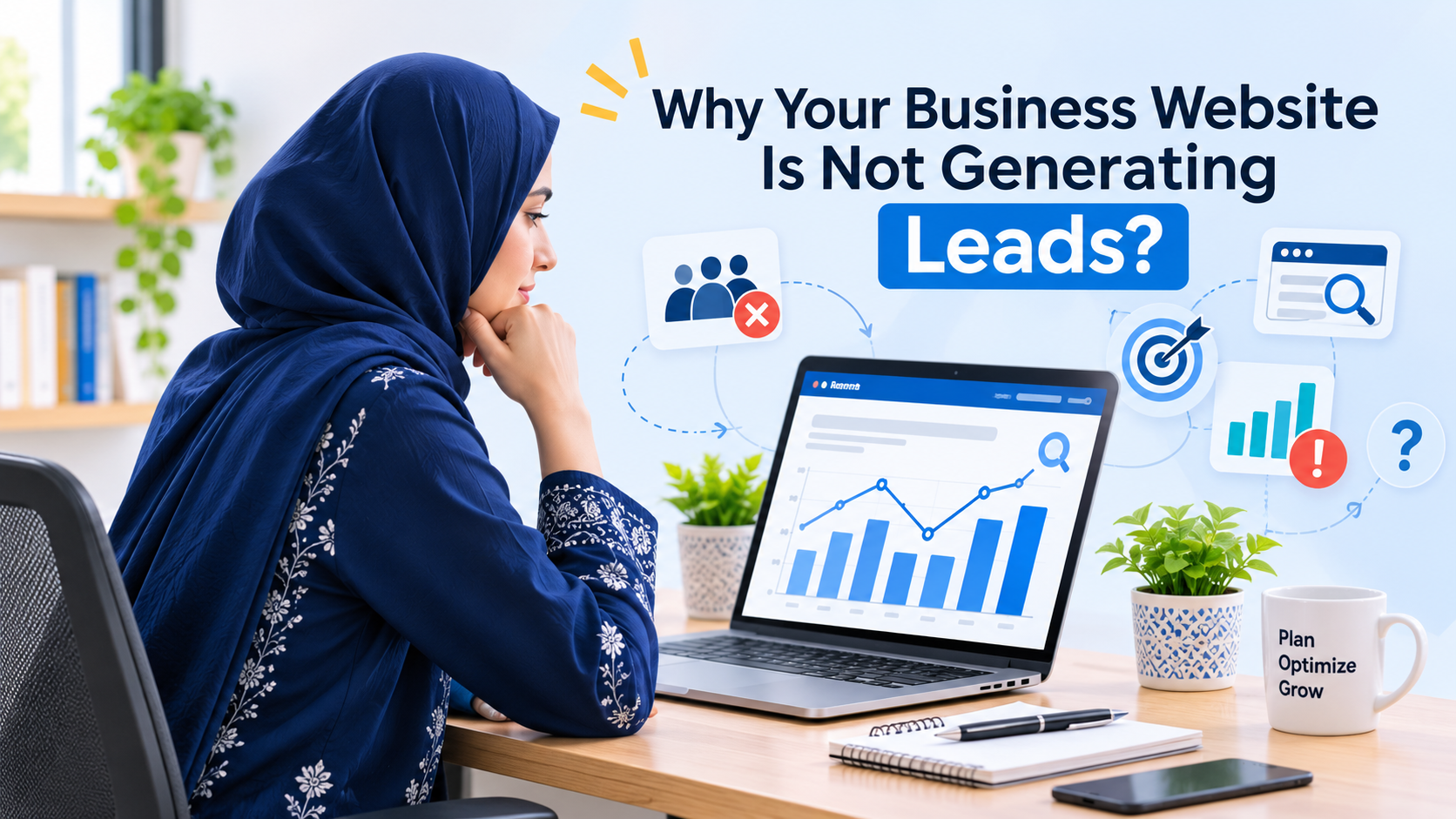
Your business website may be attracting visitors, but are those visitors becoming genuine enquiries, consultation requests or paying customers?
A website should do more than introduce your company. It should communicate your value, build trust, answer potential customers’ questions and guide the right audience towards taking action. If people visit your website but rarely submit an enquiry, request a quotation or contact your team, there may be gaps in your website’s messaging, user experience or lead-generation strategy.
For small and medium-sized businesses (SMEs), startups and professional service providers, these gaps can result in missed opportunities and wasted marketing expenditure.
Why is your business website not generating qualified leads? Common reasons include unclear messaging, attracting the wrong audience, weak calls to action, incomplete service pages, insufficient trust signals, poor mobile usability and a lack of conversion tracking.
Let’s examine seven common problems and practical ways to address them.
1. Your website messaging is too broad
One of the most common reasons a business website fails to generate qualified leads is unclear communication.
Statements such as “We provide innovative business solutions”, “Your trusted partner for success” or “Quality services at competitive prices” may sound professional, but they do not explain what your business actually does or why a potential customer should choose you.
Visitors should be able to understand three things within a few seconds:
- What services or solutions do you offer?
- Which customers or businesses do you help?
- What specific problem can you solve?
For example, instead of saying:
We provide complete business solutions for organisations.
Consider a more specific message:
We help SMEs improve business operations, strengthen HR processes and generate qualified enquiries through practical consultancy and digital marketing services.
The second statement communicates the audience, services and intended business outcomes more clearly.
How to improve it: Review your homepage headline, introduction and service descriptions. Replace generic promotional language with specific customer problems, relevant services and realistic outcomes. Avoid exaggerated promises that your business cannot substantiate.
2. You are attracting the wrong audience
Website traffic is not the same as business growth. A website can receive hundreds or thousands of visitors without generating a single relevant enquiry.
This happens when your content attracts people who are researching general information rather than looking for the services you provide.
For example, a digital marketing consultancy targeting established businesses should not focus exclusively on broad topics that attract students, job seekers or people looking for free tutorials. It should also address business owners’ practical concerns, such as improving website conversions, reducing advertising waste and generating relevant leads.
How to improve it:
- Define your ideal customer profile (ICP), including industry, business size, location and decision-making role.
- Identify the problems your potential customers are actively trying to solve.
- Use relevant keywords that reflect commercial or service-related search intent.
- Create educational content that connects naturally with your actual services.
- Review search queries, website traffic sources and enquiry quality regularly.
For businesses operating in Pakistan and international markets, geographical relevance also matters. Mention the markets you serve, the industries you understand and the locations where your services are available.
The objective is not simply to increase website visits. It is to attract people who have a genuine reason to consider your services.
3. There is no clear next step or call to action
Imagine a visitor understands your services, finds your website informative and is interested in working with you. What should they do next?
If the answer is unclear, you may lose that potential customer.
A call to action (CTA) tells visitors what action to take. Examples include:
- Request a business consultation.
- Discuss your digital marketing requirements.
- Request a service proposal.
- Book an initial consultation.
- Submit your project requirements.
Avoid relying only on generic phrases such as “Learn More” or “Click Here” when a more specific action would communicate greater value.
Your CTA should also match the visitor’s stage in the buying journey. Someone reading an educational article may prefer a business health-check or consultation guide, while someone reviewing your service page may be ready to request a proposal.
How to improve it: Give every important page one primary conversion objective. Place a relevant CTA where visitors can easily find it, particularly after explaining the service, demonstrating its value and addressing common concerns.
Make sure the CTA leads to a working contact form, booking page, email address or WhatsApp conversation.
4. Your service pages lack sufficient detail
A service page should help a prospective customer evaluate whether your business can meet their requirements.
Simply listing services such as SEO, social media marketing, HR consultancy, business strategy or corporate training does not provide enough information to support a purchasing decision.
Visitors need to understand:
- What exactly is included in the service?
- Which business problems does it address?
- What is the process of working with your organisation?
- What information or resources will the client need to provide?
- What deliverables can the client expect?
- How can they request further information?
For example, a digital marketing service page should explain the role of strategy, audience research, content planning, search optimisation, campaign management and performance measurement, where these are part of the actual service offering.
Similarly, a corporate training page should describe the training areas, assessment process, delivery format and intended learning outcomes.
How to improve it: Develop a dedicated, detailed page for each major service. Use descriptive headings, practical examples, process explanations and relevant FAQs. Clearly distinguish between services instead of placing everything on one crowded page.
5. Your website is missing trust signals
People are cautious about sharing business information, submitting project details or engaging an unfamiliar service provider.
A professional-looking website is important, but design alone does not establish credibility.
Potential customers often look for evidence that your business has relevant experience, understands their challenges and can deliver what it promises.
Useful trust signals include:
- A clear company profile and genuine business contact information.
- Relevant professional experience and team credentials.
- Verifiable client testimonials, published with permission.
- Case studies explaining the problem, approach and measurable results.
- Samples of previous work or relevant project experience.
- Professional social media and business profiles.
- Transparent descriptions of services and working processes.
Do not invent testimonials, client names, statistics or project outcomes. If you cannot publish confidential client information, describe the nature of the work without disclosing protected details.
How to improve it: Build credibility throughout the website rather than limiting it to the About Us page. Add relevant proof to individual service pages so visitors can evaluate your experience while considering a particular solution.
6. Poor mobile usability and complicated forms create friction
A visitor may be interested in your service but abandon the enquiry process because your website is difficult to use.
This is particularly important when your audience accesses your website through smartphones. Small text, difficult navigation, slow-loading pages, overlapping elements and poorly displayed forms can make a website frustrating.
Contact forms can create another obstacle. Asking for excessive information at the first interaction may discourage potential customers from completing the process.
For an initial enquiry, you may only need:
- Name
- Business email or preferred contact method
- Company or business name (where relevant)
- Service of interest
- A short description of the requirement
Additional information can be collected during a consultation.
How to improve it: Test your website on different mobile devices. Check navigation, page loading, button visibility, form fields and confirmation messages. Remove unnecessary form questions and make sure visitors know what happens after submitting an enquiry.
A good user experience makes it easier for interested visitors to become identifiable prospects.
7. You are not measuring what happens after the click
Without conversion tracking, you may know how many people visit your website but have little understanding of whether your marketing activities generate business opportunities.
For example, social media may generate significant traffic, while organic search produces fewer visitors but more relevant enquiries. Without measurement, you may invest in the wrong channel.
Useful metrics include:
- Website sessions and traffic sources.
- Landing-page engagement.
- Contact form submissions.
- Consultation or quotation requests.
- WhatsApp and email enquiries.
- Conversion rate by landing page or marketing channel.
- Percentage of enquiries that become qualified leads.
- Cost per lead for paid campaigns.
Tools such as Google Analytics 4, Google Search Console and Microsoft Clarity can help businesses understand website performance, search visibility and user behaviour. Appropriate event tracking should be configured to measure meaningful actions.
Remember that a form submission is not automatically a qualified lead. A qualified lead should have a relevant requirement, a reasonable fit with your services and a genuine possibility of becoming a client.
How to improve it: Establish a simple reporting process. Review which pages attract relevant visitors, which CTAs generate enquiries and which marketing channels produce opportunities worth pursuing. Use this information to improve your website and marketing decisions.
A practical business website conversion check
Before investing more money in advertising or publishing additional content, evaluate whether your website is ready to convert visitors into enquiries.
Ask yourself:
- Can a new visitor understand what we offer within a few seconds?
- Is our target audience clearly identified?
- Does each important page address a specific customer problem?
- Are our service descriptions detailed and useful?
- Can visitors find a clear and relevant call to action?
- Are our contact forms short, functional and mobile-friendly?
- Do we demonstrate genuine experience and credibility?
- Are our website pages loading and functioning correctly?
- Can we identify where enquiries originate?
- Do we measure the quality of enquiries, not just website traffic?
If you answer “No” to several questions, your website may need a conversion-focused review before you increase your marketing spend.
Frequently Asked Questions (FAQs)
Why is my business website getting traffic but no leads?
Your website may be attracting visitors who are not part of your target audience, communicating its services unclearly or failing to provide a compelling next step. Review your keyword targeting, page content, calls to action, contact forms and conversion tracking.
How can I generate more qualified leads from my website?
Start by identifying your ideal customers and the problems they want to solve. Create relevant service pages, publish useful content, add clear calls to action, demonstrate credibility and make it easy for visitors to contact you. Measure enquiry quality as well as traffic.
What is a good website conversion rate?
There is no single conversion-rate benchmark that applies to every business. Results depend on industry, traffic source, audience intent, offer, website design and the type of conversion being measured. Compare your own performance over time and distinguish between general enquiries and genuinely qualified leads.
Is SEO enough to generate business enquiries?
SEO can improve visibility and attract relevant organic traffic, but rankings alone do not guarantee enquiries. Your website also needs useful content, clear service information, credibility, a good user experience and effective conversion paths.
Should small businesses invest in Google Ads or SEO?
The right choice depends on your objectives, budget, competition and timeline. Google Ads can provide visibility for selected searches while campaigns are running. SEO is a longer-term approach to improving organic search visibility. Many businesses benefit from a coordinated strategy that combines search optimisation, paid campaigns and useful content.
How often should I review my business website?
Review website functionality, contact forms and important links regularly. Analyse performance monthly and conduct a more detailed review whenever you change services, marketing campaigns, target markets or website structure.
Final Thoughts: Your Website Should Support Business Growth
A business website is not simply an online brochure. It is an important part of your marketing, communication and lead-generation infrastructure.
If your website attracts visitors but does not generate relevant enquiries, the answer may not be to publish more content or spend more on advertising. You may first need to improve your messaging, audience targeting, service information, trust signals, user experience and conversion measurement.
A well-structured website helps potential customers understand your value, evaluate your expertise and take the next step with confidence.
At DMMS (Multiple Management Solutions), we believe that effective digital marketing starts with understanding business objectives—not simply increasing clicks, impressions or website traffic.
We help businesses assess their digital presence, identify practical improvement opportunities and develop strategies aligned with their growth objectives.
Is your website generating the right business enquiries?
If you are unsure where your website is losing potential customers, start with a structured review of its content, user experience and lead-generation process.
Discuss your business requirements with DMMS:
- Website: https://dmms.pk
- Email: info@dmms.pk
- WhatsApp: https://wa.me/923238886780
Let’s identify what is preventing your website from turning the right visitors into meaningful business opportunities.





Leave a Reply