

Quick Summary / Key Takeaways
- Pakistan’s freelancers generated a record $1.76 billion in export earnings in FY2025-26 (up 78% year-on-year), with an estimated 2.5–3 million active freelancers.
- The market no longer rewards general digital activity. It pays for specialization + proof of work — narrow expertise backed by tangible results.
- High-demand areas include online marketing, e-commerce management, content systems, and tech services that deliver specific outcomes (leads, visibility, store performance, analytics, or training).
- Key barriers in Pakistan: uneven digital literacy, online harassment (especially for women), cultural constraints, infrastructure issues, and limited awareness of free programs like DigiSkills.
- Winning strategy: Choose one narrow service → build a small portfolio of real results → package it as a recurring monthly retainer rather than one-off projects.
In Pakistan’s rapidly expanding digital economy, the path to online income has matured. What once felt like an open field of “learn any skill and start freelancing” has become more selective. Aspiring freelancers, students, and small business owners can still generate meaningful income, often in dollars, but the strongest model today is clear: Specialization + Proof of Work.
This shift is not theoretical. It is already reflected in the numbers and in the experiences of those earning consistently on platforms and through direct clients.
The Shift: Why General Digital Skills Are No Longer Enough
Digital skills remain one of the most practical routes to income in a country with a large youth population and growing internet access. Government initiatives under the broader Digital Pakistan and Uraan Pakistan frameworks have emphasized online marketing, e-commerce, content creation, and tech services. Programs such as DigiSkills.pk have delivered millions of trainings, equipping participants with freelancing, digital marketing, graphic design, SEO, e-commerce management, and related skills. Graduates of these programs have contributed substantially to the sector’s export performance.
Yet the market has evolved. Clients, whether international on Upwork and Fiverr or local SMEs, are no longer impressed by broad claims of “I do digital marketing” or “I can handle social media.” They respond to specialists who can point to concrete outcomes: more qualified leads, higher search visibility, better-performing product listings, clearer analytics, or staff trained in safer online practices.
Generalists compete on price in a crowded field. Specialists compete on results and can command retainers.

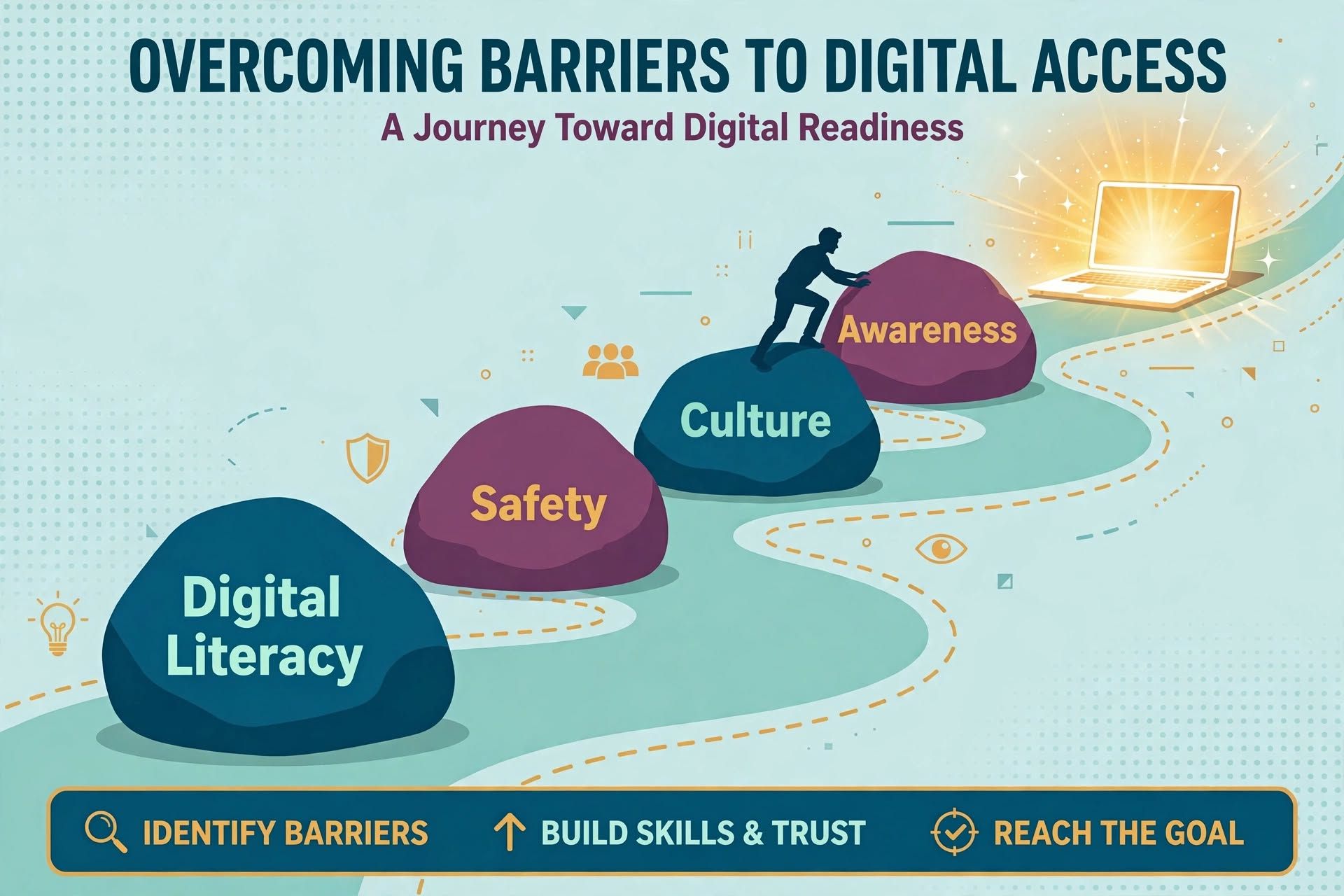
Overcoming Barriers to Digital Access: A Journey towards Digital Readiness
Current Landscape: Opportunities in Digital Pakistan
Pakistan’s freelancing sector has become a meaningful contributor to foreign exchange. Official data show freelance exports rising from roughly $396 million in FY2021 to $1.76 billion in FY2025-26, with IT freelancers contributing over $1.16 billion and non-IT services (content, marketing, design, support) growing even faster in percentage terms. Industry estimates place the active freelance workforce between 2.5 and 3 million people.
Demand clusters around four practical areas:
- Online marketing and lead generation — especially for local businesses that need WhatsApp funnels, Meta ads, or Google visibility.
- E-commerce support — product listing optimization, store management on platforms like Daraz or Shopify, and conversion improvements.
- Content systems — calendars, SEO-optimized writing, and short-form video strategies tailored to Pakistani and regional audiences.
- Tech-enabled services — analytics setup, basic automation, website speed fixes, or digital safety training for teams.
These align with national priorities around digital skills, e-commerce growth, and knowledge-based exports. For students and small business owners, the opportunity is dual: freelancers can serve international clients for dollar income while also helping local businesses digitize.
The Barriers: Real Constraints in the Pakistan Context
Progress is real, but so are the obstacles. Limited digital literacy remains widespread, particularly outside major cities and among women. Many people complete introductory courses yet struggle to translate knowledge into client-ready work. Online harassment and safety concerns disproportionately affect female freelancers, reinforcing cultural hesitations about visible online activity or interaction with foreign clients.
Awareness of support programs is uneven. Free training through DigiSkills and related initiatives exists at scale, yet many potential participants do not know how to enroll, complete courses effectively, or move from certificate to paid work. Infrastructure challenges — unreliable internet and electricity in some areas — and payment friction (limited direct access to certain global platforms) add friction. Gender gaps in earnings and participation persist even after controlling for skill and platform.
These barriers are not reasons to avoid the space. They are reasons to approach it with realism: start narrow, document results carefully, prioritize safety, and use available public programs deliberately.
Market Reality: Specific Outcomes Over General Activity
The market rewards measurable value. Clients pay for:
- Generating qualified leads (not just “running ads”)
- Improving search visibility or product ranking
- Managing or optimizing online stores so sales rise
- Producing usable analytics or reports
- Training staff in practical digital safety or tools
A portfolio that shows “I increased leads by X% for a local clinic via WhatsApp + Meta” or “I improved conversion on 12 product listings for a Daraz seller” carries far more weight than a list of software skills. This is the essence of Proof of Work.
The Practical Strategy: Narrow Service, Portfolio, Recurring Revenue

Here is a concrete path suited to the Pakistani context:
- Select one narrow service.
Examples that map well to local and international demand:
- WhatsApp lead funnel setup and management for service businesses
- Local SEO audit + basic optimization for Google Business Profile and website
- Content calendar + short-form content system for Instagram/TikTok/YouTube
- Product-listing improvement (titles, images, descriptions, pricing signals) for e-commerce sellers
- Basic Google Analytics / Meta Pixel setup and monthly reporting Avoid “I do everything digital.” Choose one outcome you can deliver and improve repeatedly.
- Build a small portfolio of proof.
Start with 2–4 real or highly realistic examples. Offer a discounted or free pilot to a local business, document the before-and-after (screenshots, metrics, client feedback), and turn it into case studies. Even student projects or personal experiments can count if results are clear and honest. Platforms and direct clients both respond to evidence more than claims. - Package it as a recurring monthly service.
One-off projects create feast-or-famine income. A monthly retainer — for example, “ongoing lead funnel management + weekly optimization” or “monthly content calendar + performance review” — creates predictability for both sides. Price based on value delivered rather than hours. Many successful Pakistani freelancers have shifted from $5–15/hour gigs to retainers of several hundred dollars per client by specializing and proving results. - Leverage available support and protect yourself.
Complete relevant DigiSkills or equivalent courses for foundational knowledge and certificates. Use formal banking channels where possible for exports. Prioritize platforms and clients with clear terms. For women and others concerned about safety, start with local or known networks, use professional profiles, and learn basic digital hygiene.
This model works for pure freelancers seeking export income and for small business owners who want to offer specialized digital services to other SMEs while building their own operations.
Moving Forward with Realism and Momentum
Pakistan’s digital economy has demonstrated that individual skill can translate into national foreign-exchange gains. The $1.76 billion figure is evidence of scale; the jump in average earnings per freelancer over five years shows rising value.
Success, however, is no longer automatic. It requires choosing a narrow lane, producing visible proof, and selling outcomes rather than activity. Students can begin while studying. Aspiring freelancers can treat the first portfolio pieces as the real curriculum. Small business owners can productize one service and sell it repeatedly.
The barriers are genuine. So is the opportunity. Those who treat digital work as a craft of specialization and evidence, rather than a general side hustle, are the ones most likely to turn Pakistan’s digital momentum into steady personal income.
In order to get more information about relevant topics subscribe to our newsletter.
- The Future of AI to 2030: Agents, Economics and the AGI Timeline Debate

- Why 1984 Is the Worst Dystopian World to Live In: 5 Nightmarish Alternatives Compared

- My Blogging Journey: Apparently, I’m Not Done Dreaming Yet!
- AI-generated deepfakes targeting women in politics intensify calls for stronger protection

- using AI in my daily routine is something I never thought I would …

Share your views on it