
Strait of Hormuz: Why a narrow maritime passage has become one of the world’s most important economic pressure points and what businesses, governments and households should prepare for.

Table of Contents
Introduction: When geopolitics becomes an economic reality
A geopolitical conflict thousands of kilometres away can influence the price of fuel in Pakistan, the cost of transporting goods across continents, the profitability of manufacturing businesses and the purchasing power of ordinary households.
The Strait of Hormuz demonstrates this relationship more clearly than almost any other strategic waterway.
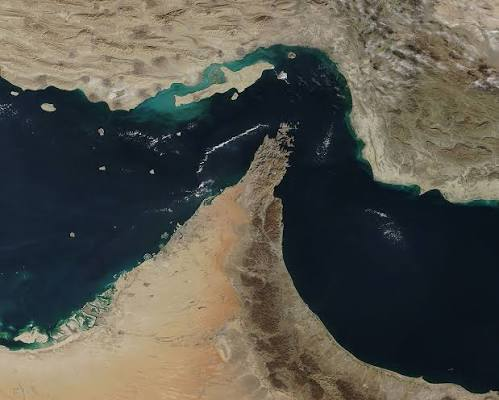
Situated between Iran and Oman, this narrow maritime passage connects the Persian Gulf with the Gulf of Oman and the wider Indian Ocean. It is a critical route for international petroleum and liquefied natural gas (LNG) shipments.
The ongoing confrontation involving Iran, the United States and regional actors has transformed the Strait into a major source of uncertainty for international energy markets and commercial shipping.
Iran indicated on 2 November 2026 that it was considering a proposal to restore security and reopen the Strait within two days if US conditions were met. However, this was a conditional diplomatic proposal, not confirmation that normal commercial shipping had resumed.
On 4 November, Iran’s Revolutionary Guard also reported that four tankers had caught fire after hitting naval mines and that two other vessels had been seized. These claims require independent verification and should not be treated as established facts about every reported incident.
The International Maritime Organization continues to monitor confirmed maritime incidents and risks to commercial vessels and seafarers.
The central question is therefore no longer simply whether the Strait will reopen. It is how long uncertainty will persist, what it will cost the global economy and which countries and businesses are most exposed.
1. Why the Strait of Hormuz matters to the global economy
The Strait of Hormuz is a critical energy-trade chokepoint.
Before the current conflict, approximately one-fifth of global petroleum liquids consumption passed through this route, alongside a substantial share of internationally traded LNG.
Its importance extends beyond the countries bordering the Persian Gulf.
Major energy exporters using this route include:
- Saudi Arabia
- Iraq
- Kuwait
- Qatar
- United Arab Emirates
- Iran
Major importing economies exposed to disruptions include China, India, Japan, South Korea and other Asian markets.
The economic consequences of a disruption can extend through several interconnected markets:
- Reduced availability of energy supplies.
- Increased competition for alternative shipments.
- Higher oil and LNG prices.
- Increased freight and insurance premiums.
- Higher production and transportation costs.
- Inflationary pressure on importing economies.
This is why even a temporary disruption can have consequences beyond the immediate conflict zone.
2. Why Pakistan is particularly vulnerable
Pakistan’s exposure is significant because it imports a substantial proportion of its petroleum and LNG requirements.
Its energy system depends on imported supplies, domestic production, electricity generation, industrial consumption and the availability of foreign exchange.
The Centre for Strategic and International Studies (CSIS), in its August 2026 assessment of Pakistan’s LNG exposure, highlighted the country’s heavy reliance on Qatari LNG and the consequences of disruptions to Gulf supplies.
The report noted that more than 90% of Pakistan’s imported LNG came from Qatar in the period examined.
This dependence creates several economic vulnerabilities.
A. Energy prices and inflation
Higher international oil prices can increase:
- Petrol and diesel prices.
- Electricity generation costs.
- Transportation and logistics expenses.
- Agricultural input costs.
- Food distribution expenses.
- Manufacturing overheads.
Businesses often transfer part of these additional costs to consumers.
The result can be a broader increase in the cost of living.
B. LNG shortages and industrial productivity
LNG is an important component of Pakistan’s energy supply.
Disruptions to LNG availability can create difficulties for electricity generation and industries that rely on gas for production.
Sectors potentially exposed include:
- Textile manufacturing.
- Fertiliser production.
- Cement.
- Chemicals.
- Food processing.
- Other energy-intensive industries.
The impact depends on the duration of the disruption, alternative fuel availability, electricity demand and government allocation decisions.
C. Pressure on foreign exchange
Pakistan must purchase many of its energy supplies in foreign currency.
When international energy prices rise, the import bill can increase even if the volume of imported fuel remains unchanged.
This creates pressure on foreign-exchange reserves and the external account.
It can also complicate exchange-rate management and macroeconomic stabilisation.
3. The economic transmission mechanism: How a shipping disruption reaches Pakistani households
Consider a simplified chain of events:
Maritime disruption → Reduced energy availability → Higher international prices → Increased import costs → Higher domestic production costs → Higher consumer prices.
The effects are interconnected.
For example, higher diesel prices can increase the cost of transporting agricultural produce. Higher transportation costs can raise wholesale food prices. Manufacturers may face more expensive electricity and logistics, while retailers may struggle to maintain margins.
This demonstrates why energy security is not simply an issue for the petroleum sector. It is an economy-wide concern.
4. What happens to global shipping and insurance?
A commercial vessel travelling through a high-risk maritime corridor faces more than fuel costs.
Shipowners, operators and cargo insurers must consider:
- War-risk insurance premiums.
- Crew safety and evacuation arrangements.
- Vessel availability.
- Port congestion.
- Rerouting costs.
- Contractual delivery obligations.
- Delays and demurrage charges.
Even if a shipping route is technically open, commercial operators may hesitate to use it if the perceived risk remains excessive.
This distinction is important.
A waterway being declared open does not automatically mean commercial shipping has returned to normal.
Insurers, shipping companies, port authorities and national maritime agencies must also consider whether safe passage can be maintained.
5. Three possible scenarios for the global economy
Rather than predicting one outcome, businesses should prepare for several plausible scenarios.
Scenario 1: Diplomatic settlement and gradual normalisation
Under this scenario:
- Maritime security improves.
- Shipping confidence gradually returns.
- Energy supplies become more predictable.
- Insurance costs begin to moderate.
- Oil and LNG markets experience reduced uncertainty.
However, prices may not immediately return to previous levels because supply contracts, freight arrangements and insurance costs take time to adjust.
Scenario 2: Prolonged uncertainty and intermittent disruption
This scenario could involve:
- Negotiations continuing without a comprehensive settlement.
- Periodic maritime security incidents.
- Continued volatility in oil and LNG prices.
- Higher insurance premiums.
- Delayed cargo deliveries.
For Pakistan, this could create sustained pressure on energy procurement, electricity generation, foreign exchange and industrial costs.
Scenario 3: Escalation and wider regional disruption
A further deterioration in the conflict could result in more extensive disruptions to maritime traffic and regional energy infrastructure.
Potential consequences include:
- A substantial energy-price shock.
- More expensive shipping.
- Increased global inflation.
- Greater volatility in currency markets.
- Reduced investment confidence.
- Pressure on emerging-market economies.
This is a risk scenario, not a prediction that escalation will occur.
6. Which Pakistani industries should be most concerned?
| Industry | Potential exposure | Recommended response |
|---|---|---|
| Textiles | Energy and production costs | Review energy efficiency and margins |
| Agriculture | Diesel, fertiliser and transport | Improve procurement planning |
| Transport | Fuel and logistics costs | Reassess pricing and routes |
| Aviation | Jet fuel and insurance | Review fuel-cost exposure |
| Food processing | Energy and distribution | Optimise inventory and production |
| Retail | Transport and consumer purchasing power | Review demand and pricing |
| Construction | Fuel, materials and logistics | Review project budgets |
| SMEs | Operating expenses and cash flow | Prepare contingency budgets |
7. What should Pakistani businesses do now?
Businesses do not need to predict geopolitical developments accurately to improve their resilience.
They need to understand their exposure and prepare for uncertainty.
A practical business continuity checklist:
- Identify critical imported materials and energy dependencies.
- Calculate the effect of a 10%, 20% and 30% increase in relevant input costs.
- Review supplier concentration and alternative sourcing options.
- Examine inventory levels for critical inputs.
- Review contractual provisions relating to delayed deliveries and price adjustments.
- Maintain appropriate working-capital buffers.
- Monitor exchange-rate exposure.
- Identify energy-efficiency improvements.
- Establish a clear internal process for responding to supply disruptions.
- Review business continuity plans regularly.
These measures are especially relevant to Pakistani SMEs that may not have the financial capacity to absorb sudden cost increases.
8. Can Pakistan turn geopolitical uncertainty into an opportunity?
Pakistan’s geographic location, diplomatic relationships and access to regional markets give it strategic importance.
However, long-term economic resilience requires more than diplomatic engagement.
The country needs to strengthen:
- Energy-source diversification.
- Domestic energy production.
- Renewable energy capacity.
- Storage and distribution infrastructure.
- Export competitiveness.
- Industrial energy efficiency.
- Regional trade connectivity.
There may also be opportunities for Pakistani exporters and manufacturers if regional supply-chain diversification creates demand for alternative production locations.
These opportunities will only materialise if businesses can offer competitive prices, dependable delivery, consistent quality and reliable infrastructure.
Conclusion: Energy security is economic security
The Strait of Hormuz crisis illustrates how geopolitical developments can influence businesses and households far beyond the immediate conflict zone.
For Pakistan, the challenge is particularly significant because energy imports influence inflation, industrial competitiveness, foreign exchange and economic stability.
The most important lesson for businesses is that geopolitical risk should no longer be treated as something relevant only to governments, diplomats or multinational corporations.
It is a practical business-management issue.
Companies that understand their supply-chain vulnerabilities, monitor international developments and prepare alternative operating arrangements will be better positioned to withstand disruption.
The question for Pakistani businesses is not simply what happens next in the Strait of Hormuz.
It is whether they are prepared for the economic consequences of whatever happens next.
Frequently asked questions
1. Why is the Strait of Hormuz important to the global economy?
The Strait is a major route for international oil and LNG shipments. Disruption can affect energy availability, shipping costs, inflation and international trade.
2. How does the Strait of Hormuz crisis affect Pakistan?
Pakistan imports significant quantities of petroleum and LNG. Disruptions can increase energy costs, affect electricity generation, place pressure on foreign exchange and increase production and transport expenses.
3. Will petrol prices in Pakistan increase if the Strait remains disrupted?
Higher international oil prices can increase Pakistan’s import costs and create pressure for domestic petroleum-price increases. However, actual retail prices also depend on exchange rates, taxation, government pricing decisions and other factors.
4. Which Pakistani industries are most vulnerable?
Energy-intensive manufacturing, textiles, agriculture, fertiliser production, transport, aviation and food processing may be particularly exposed.
5. What can businesses do to protect themselves?
Businesses should assess imported-input dependence, diversify suppliers where possible, review inventory and cash-flow requirements, improve energy efficiency and prepare contingency plans.
Sources and further reading
- International Maritime Organization – Middle East and Strait of Hormuz maritime updates
- International Energy Agency – Oil market analysis
- CSIS – Pakistan’s LNG Imports Under Pressure
- Reuters – Iran’s conditional proposal to reopen the Strait
- Reuters – Reported tanker incidents near the Strait
- World Bank – Commodity Markets
DMMS Business Advisory
Is your business prepared for rising energy costs, supply-chain disruption and international market uncertainty?
DMMS helps businesses assess operational risks, improve business processes and develop practical strategies for sustainable growth.
For a business health check or strategic consultation:
Website: https://dmms.pk
WhatsApp: +92 323 8886780
DMMS – Multiple Management Solutions | Business Strategy. Digital Growth. Sustainable Performance.


Share your views on it